


A celebration of the
Mojave Desert Tortoise
& Gila Monster

City of St. George, Washington County
Located at 142 N. Main Street, next to Zion Brewery’s Station Two Bar, this mural brings awareness to threatened species that have called the Southwest home for thousands of years. The desert tortoise, known for its slow-moving nature and long lifespan, and the Gila monster, one of North America’s only venomous lizards, have both struggled to survive as urban development, climate change, and habitat loss take their toll. The mural was created by by Chris Peterson in partnership with the City of St. George, the Red Cliffs Desert Reserve, Greater Zion, and Station Two Bar.
Mojave Desert Tortoise


The Mojave desert tortoise is a threatened species found in the Mojave Desert of California, Nevada, Arizona, and Utah. They are a keystone species, which means they have a higher influence over their ecosystem than other species. Many other species in the desert use their burrows and benefit from having desert tortoises around, including the Gila monster, collared peccaries, roadrunners, and burrowing owls. They eat a variety of grasses, shrubs, cacti, and wildflowers, and get much of their water from succulents.
Gila Monster

The Gila Monster is the official Utah State Reptile; It is the largest and only venomous lizard in the U.S., Gila monsters can reach up to 2 feet in length. Each lizard has a unique pattern of beaded skin consisting of black bands with pink, orange, or yellow colored scales.
Gila monsters spend up to 98% of their time in underground burrows or rock shelters. They eat nesting mammals and the eggs of birds, lizards, snakes, and tortoises. Since they eat only a few times per year, each meal is very large and they can consume up to a third of their body mass in one sitting! They store some of the food as fat in their tail for long periods of inactivity.

This Wildlife Walls project was made possible through key partnerships.
This project was made possible through key partnerships with St. George City Transportation Division and St. George City Arts Council. Additional funding and support provided by Greater Zion, Red Cliffs Desert Reserve and the Station Two Bar. This mural is part of this statewide project to install monumental murals in every county of Utah. A QR code is installed on each mural to educate visitors about the species and provide recommendations for nearby firsthand wildlife encounters.


Desert Tortoise & Gila Monster mural
Designed and installed by Chris Peterson Studio
We began working with St. George City Transportation Division in Spring 2023 to explore the potential for installing a desert tortoise mural along some of the trails and tunnels. Designs were developed and some funding was raised through a partnership with Red Cliffs Desert Reserve. We found tunnel wing walls to paint and developed designs for it.
Shortly before the install was scheduled, however, the Station Two Bar on Main Street in St. George (the old fire station) contacted the City about putting a mural on the 30 foot tall wall. Additional funding support from Greater Zion made it possible to celebrate desert tortoise on this huge wall. The original design didn't include the Gila monster on the wall, but once installation started, the owners of the Station Two Bar contributed funds to expand the mural across the whole south facades and include the Gila monster.


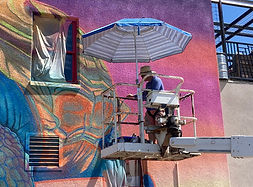

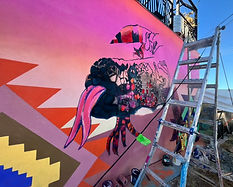
Installation began in early June 2024; intended to beat the heat of the summer, although temps exceeded 107 that week and conditions were grueling. On two of the days during the installation, Red Cliffs Desert Reserve set up a tent on site and brought a desert tortoise for outreach and education. Utah DWR also provided a biologist for an evening presentation on the tortoise, habitat and conservation efforts in the region.


From the Artist
“This project was so much fun and also probably the most difficult installation conditions I've ever encountered. I had Covid when I started and then a heat wave brought temps that exceeded 120 degrees on that south-facing wall overlooking an asphalt parking lot. The water misters I set up made a huge difference, but it took me a week after I got home to fully come out of the daze that 11 straight days on that wall put me in. Still, I had a blast and was so impressed by the local pride for these particular species and the commitment of our partners to celebrate them with us. " -chris peterson

Celebrating Utah's wildlife with big art and wildlife encounters across the state on the Wildlife Walls Mural Trail.
Where to find Mojave Desert tortoise & Gila Monster

Map to visit the Red Cliffs Desert Reserve
111 E. Tabernacle St., St. George, Utah
Call us: 435-301-7430
We’re open Mon-Fri, 8 am-5pm
Visit the Red Cliffs Desert Reserve Discovery Center to learn more about the Mojave desert tortoise and other local wildlife.
-
When you enter by one of the Reserve’s distinctive “step-over” gates, you are accessing a special place: a place that is a privilege to visit. Not just another hiking trail or bike route, you are entering a wildlife reserve spanning almost 69,000 acres. Set aside to protect the Mojave Desert tortoise and other rare plants and animals, the reserve sits at the merging of three great ecosystems: the Mojave Desert, the Great Basin, and the Colorado Plateau.
-
The Reserve is biologically rich with a unique array of animals and plants. It is home to the most northern populations of the desert tortoise, Gila monster, sidewinder rattlesnake, and chuckwalla — reptiles typically associated with hotter and more southerly deserts like the Mojave. A significant portion of the shrubs in this area, such as blackbrush, are more commonly found in the cooler Great Basin Desert. The conditions in the region are such that several endemic species (those which occur no where else in the world) are found here.

Caution: If you do get lucky enough to see a Gila monster in the wild, do not attempt to grab or touch one. They are slow-moving animals and are harmless when left alone. They can make surprisingly quick movements if harassed or surprised, and their bite is extremely painful. Bites are seldom fatal, but medical attention should be sought immediately to prevent complications.
Nearby Wildlife Viewing Opportunities
-
Snow Canyon State Park-Tortoise Trail/Upper Galoot, Snow Canyon: One of the best locations to spot desert tortoises and Gila monsters in Utah. Visitors may also see desert bighorn sheep and Gila monsters here. Be sure to observe from a distance and never disturb a tortoise.People are most likely to see them during the day in April and May, but they may also be seen through June, July and August, especially on warm summer nights.
-
Desert tortoise, gila monters and bighorn sheep @ Red Cliffs Desert Reserve: Established to protect the Mojave Desert Tortoise, this reserve spans nearly 69,000 acres and is a haven for desert tortoises, Gila monsters, and desert bighorn sheep.
-
Lizards, rabbits, and rattlesnakes @ Bloomington Petroglyph Park: Alongside ancient Native American rock art, you can expect to see lizards, rabbits and rattlesnakes. Wear appropriate footwear and remain vigilant.
-
Bighorn sheep@ Virgin River Canyon Recreation Area: Located just across the Arizona border, this area is prime habitat for desert bighorn sheep. Early morning or late afternoon visits increase the likelihood of spotting them in the rugged canyon terrain.
-
Bighorn sheep @ Checkerboard Mesa in Zion National Park: This sandstone formation is not only a geological wonder but also a prime location for observing desert bighorn sheep year-round. A valid National Park pass is required for entry
-
California condors @ Kolob Terrace Road, Zion National Park: This scenic route offers some of the best chances to spot the rare and endangered California condor. Condors are frequently seen near Lava Point, particularly in the summer months. If you see a tagged condor, report its identification number to park staff. Never approach or offer food to a condor, as human interaction can disrupt conservation efforts.


Wildlife Etiquette: Always observe from a distance, stay on marked trails, and never feed wild animals.
The Wildlife Walls Mural Trail links 14 wildlife murals and 100+ wildlife viewing areas.
The Mural Trail was created to inspire people to get outside; Travel the Mural Trail across Utah’s spectacular landscape to visit epic murals AND enjoy diverse wildlife encounters of your own.

Hit the Mural Trail, share on social media, and tag us & hashtag: #wildlifewalls
ZOOM IN!
to 100+ wildlife viewing areas across Utah
Wildlife Walls Mural Trail Map
Travel Amenities
-
Bathrooms and Water: Available at Snow Canyon State Park visitor center, Zion National Park, and local trailheads.
-
Accommodations: St. George offers hotels, resorts, and campgrounds, with additional camping available in Snow Canyon and Zion National Park.
-
Fuel and Supplies: Restaurants, grocery stores, and gas stations are easily accessible in St. George.
While in St. George, Consider Exploring:
-
Grafton Ghost Town: A short drive from St. George, this popular ghost town offers a fascinating glimpse into Utah's pioneer history.
-
Snow Canyon State Park: Home to lava flows, sand dunes, and red rock canyons perfect for hiking and wildlife spotting.
-
Trips offered by Guides and Outfitters (Currently seeking partners. contact us)
Planning Your Visit
-
Best Time to Visit: Wildlife is most active in the desert in early mornings and late afternoons, especially in spring and fall, when temperatures are cooler.
-
Stay Informed: Before embarking on outdoor activities, check local weather forecasts and trail conditions.
-
Safety First: Wear appropriate footwear, carry sufficient water, and be aware of local wildlife, including rattlesnakes.
-
Respect Wildlife: Observe animals from a distance, refrain from feeding them, and adhere to guidelines set by local wildlife authorities