

Wildlife Walls Mural Trail
Bobcat & Pheasant

Richfield, Utah
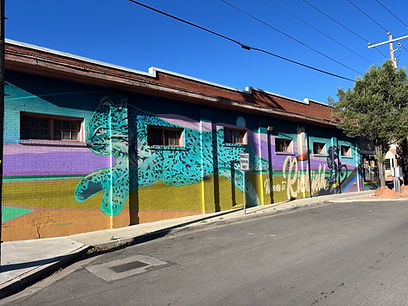
Located in downtown Richfield, Utah, the Rooster Valley Wildcat Mural highlights two species that hold a special place among locals: the bobcat and ring-necked pheasant. The high school mascot is the wildcat, and the valley was once known and marketed as Rooster Valley, renowned for its world-class pheasant hunting.
The mural celebrates the beauty of Sevier Valley and shows both the resilience and the tension within Utah’s ecosystems, where native predators and introduced game birds coexist across agricultural valleys and high desert terrain. It opens the door for conversations around human impacts on local wildlife through recreation, development and agriculture, as well as the goals of local wildlife management techniques.
Sevier Valley was once known for its abundance of upland birds, and pheasant hunting is a defining part of local culture, but ecological shifts have reshaped habitat across the region. Together, the bobcat and pheasant represent two sides of the same system, predator and prey, both shaped by human influence and environmental change.

Image: Pietsch, Stephanie & Hobson, Keith & Wassenaar, Leonard & Tütken, Thomas. (2011). Tracking Cats: Problems with Placing Feline Carnivores on δO, δD Isoscapes. PloS one. 6. e24601. 10.1371/journal.pone.0024601.
This project was made possible through key partnerships.
This Wildlife Walls project was made possible through partnerships with Mario Gonzalas, owner of Luigi’s Bike Shop at 94 North Main Street, who championed this project by rallying local partners and providing the canvas for this Wildlife Walls project. Maverik was also a significant supporter, wanting to highlight local adventure opportunities in communities served by their stores. The City of Richfield was also a financial sponsor as well as Therapy West Physical Therapy.
This mural is part of this statewide project to install monumental murals in every county of Utah.


Luigi's Garage
Richfield, Utah
Bobcat
Bobcats are native to North America and are found throughout Utah, from desert basins to mountain forests. Slightly larger than a domestic cat but smaller than a mountain lion, they are recognizable by their short, bobbed tail, tufted ears and spotted coat. Unlike most cats that rely on long tails for balance, bobcats have evolved to hunt effectively without one.
Bobcats are classified in Utah as a furbearer species and are legally hunted and trapped during specific seasons. Each year, thousands of bobcats are harvested across the state.
Trapping, in particular, remains a controversial aspect of wildlife management. Unlike regulated hunting for food, bobcat trapping is often just for the fur. Sometimes traps catch animals they weren’t meant for, and the process isn’t always quick or painless. Some people see trapping as tradition and management tool, but it raises real questions, especially for species like bobcats that aren’t overpopulated and already play an important role in balancing the ecosystem by regulating populations of smaller mammals like rabbits and rodents.
Predators in Utah are managed differently than game species like deer and elk, which often receive more conservation focus due to their economic and recreational value. In Utah, management priorities typically favor game species, sometimes at the expense of predators that are seen as competition. However, unlike wolves or grizzly bears, bobcats were never extirpated from Utah. Thanks to their adaptability, bobcats have persisted through expanding development and decades of predator control. Today, they remain one of the state’s most successful native predators.
The public perception of predators is often fearful, since people typically only hear of negative human encounters. However, bobcats pose very little risk to humans, and most interactions are brief and non-aggressive. As development continues to expand, learning how to coexist with them is critical. Most of the time, if a bobcat shows up, it’s because we gave it a reason to, so simple actions like keeping small pets inside, securing garbage, removing attractants like pet food and reducing rodent activity can help limit bobcat-human encounters.
-
Bobcats are carnivores that primarily feed on rabbits, rodents and birds, but they are capable of taking down larger prey, including deer, under the right conditions.
-
These cats are highly adaptable and extremely elusive
-
They are most active at night, dawn and dusk and spend much of their lives unseen, even in areas where they are relatively common.
-
Tracks are often the best evidence of their presence, with round footprints and no visible claw marks commonly found along snowy canyon trails

Courtesy of UDWR
Ring-Necked Pheasant
The ring-necked pheasant is not native to Utah or the Americas, but has become one of the state’s most recognizable upland game birds. Originally introduced in the late 1800s, pheasants quickly spread across agricultural valleys where grain crops, irrigation and thick vegetation created the ideal habitat. Unlike some introduced species, pheasants have become a culturally and economically important species in Utah.
By the early to mid 1900s, pheasants hunting became a big deal in Utah, and Sevier County earned its reputation as a premier hunting destination.

By Isaac Krone - https://www.inaturalist.org/photos/126415670, CC BY 4.0,
But over time, the landscape has changed. Traditional farming practices that once supported pheasants, such as small fields with diverse crop systems, have been replaced by large-scale agriculture and urban development, and things like herbicide and pesticide use have reduced insects for food and weedy cover that pheasants rely on.
Today, wild pheasants still exist, but in much lower numbers. State agencies and conservation groups now work to supplement populations by raising and releasing birds, while also trying to improve habitat where possible.
-
Pheasants thrive in areas with dense ground cover, particularly in fields used to grow things like grain and alfalfa.
-
Habitat loss, changing agricultural practices, urban development and increased predator populations have contributed to long-term declines.
-
Each year, thousands of pen-raised pheasants are released across Utah to allow for hunting opportunities and maintain populations.
Hunting & Conservation
Pheasant hunting remains part of Utah’s outdoor culture, although the prime hunting locations have diminished, and we have learned a lot about the broader ecosystem impacts of hunting practices in Utah. If you choose to hunt pheasants or any wildlife, it is important to follow all local regulations and permit requirements.
One of the most significant ways hunters can reduce their impact is by avoiding lead ammunition. Lead is highly toxic and one of the leading human-caused sources of death in raptors and other scavenging wildlife. When a firearm is discharged, small fragments of lead can spread into the surrounding environment and enter the food chain. Even one grain of rice worth of lead is enough to kill an eagle.
Switching to non-lead ammunition helps reduce this risk. Similar considerations apply to fishing, where non-lead tackle can help limit contamination in aquatic ecosystems. Small changes in material use can have a measurable impact on wildlife and human health over time.
Rooster Valley Wildcat Mural
In May 2024, Mario Lopez- owner of Luigi's Bike Shop in Richfield- contacted me about a potential mural on his Main Street building. He started talking to locals about the project and was able to get some interest from the City. With the high school mascot as a wildcat, we started working on a bobcat concept. In a City Council meeting, we heard from locals that there was some nostalgic pride over the old label "Rooster Valley" and the Sevier valley's once-upon-a-time reputation as a world-class pheasant hunting destination.
While we were able to raise a few thousand dollars between Mario and the City, this project found Maverik as a co-sponsor. With significant financial support from Maverik, we were able to finalize the design and start install in October 2025. We also received financial support from Therapy West Physical Therapy. The County gave us verbal commitment to support the project, but when it came to paying, they declined.
The install process happened over three visits to Richfield. Initially, I washed and masked the wall. After priming it, I put down some background color for the bobcat and the pheasant. I was lucky to have Bryan Maxfield- a UDWR Biologist and artist- come through town and help one day early on. Over the course of the project, we had a bunch of people participate in helping paint it, including Kate Tanner, Riley Gleave, Emma Gonzalez, Merritt Conder, Calli Hulet, Claire Hulet and Claire Hulet.We had a ribbon cutting event sponsored by Richfield City at the end of the project, and I got to use the giant scissors!
While nearly all feedback on the mural was positive, I did have two separate encounters with folks who drove by and felt compelled to stop and tell me that bobcats aren't aqua blue. I engaged in a fun debate about art vs. photography and "what color is a bobcat in the moonlight", but they weren't convinced. This is an experience I've had in other places, where some people just aren't comfortable with fantastically-colored critters and the sensations that big color has in their bodies. This has led me to recognize that part of what I do is color missionary work. -Chris Peterson


Celebrate Utah's wildlife with public art and wildlife encounters across the state on the Wildlife Walls Mural Trail.
The Wildlife Walls Mural Trail links 14 wildlife murals and 100+ wildlife viewing areas.
The Mural Trail was created to inspire people to get outside; Travel the Mural Trail across Utah’s spectacular landscape to visit epic murals AND enjoy diverse wildlife encounters of your own.

Hit the Mural Trail, share on social media, and tag us & hashtag: #wildlifewalls
ZOOM IN!
to 100+ wildlife viewing areas across Utah
Wildlife Walls Mural Trail Map
Where to see Bobcats and Pheasants
Bobcats
Good luck! They don’t want you to see them and they’re very good at it.
-
Fishlake National Forest: Dense forests and rugged terrain provide ideal habitat for bobcats. Sightings are rare, but tracks are commonly found in winter.
-
Sevier Valley Agricultural Edges: Transitional zones between farmland and brushy habitat offer prime bobcat feeding grounds, especially at dawn and dusk.
-
Antelope Island State Park: Though better known for bison, bobcats are occasionally spotted in more remote areas of the island.
Pheasants
-
Sevier River Corridor: Look along grassy edges, irrigation ditches and agricultural fields, especially early in the morning.
-
Public Wildlife Management Areas (WMAs): Areas like Bud Phelps, Bear River Bottoms, Ogden Bay, Farmington Bay and Clear Lake Wildlife Management Areas are known to have the highest number of pheasants. The states pheasant release locations can be found on this map.
-
Farmland Edges Near Richfield: Pheasants are most commonly seen near cover such as brush lines, fence rows, and field margins.
When and How to See Pheasants
Best time of day: sunrise and sunset
Best season: fall through early winter
-
Look for:
● Roosters crossing roads
● Birds flushing from tall grass
● Tracks in snow along field edges
Wildlife Etiquette: Observe animals from a distance, respect private property near agricultural areas, and avoid disturbing wildlife during sensitive seasons.
Plan your trip
Travel Amenities
Accommodations:
-
Richfield offers a range of hotels, motels, and nearby camping options, including Fishlake National Forest campgrounds.
Fuel and Supplies:
-
Gas stations, grocery stores, and restaurants are located throughout Richfield, making it a convenient base for exploring the area.
Best Time to Visit:
-
Spring and fall offer the best opportunities for wildlife viewing, with cooler temperatures and increased animal activity.
What to Bring:
-
Binoculars, sturdy shoes, water and layered clothing. Early mornings and evenings are best for spotting wildlife.
While You’re Here, Consider Exploring
-
Fishlake National Forest: Known for its alpine lakes, wildlife viewing opportunities and the worlds largest tree, called Pando—an aspen grove totaling 13 million pounds.
-
Fremont Indian State Park and Museum: A great place to learn about the region’s cultural history and ancient rock art.
-
Monroe Mountain Scenic Byway: A high-elevation drive with great views, wildlife viewing opportunities, and access to hiking trails.
-
Mountain biking is epic, some wildlife may be encountered, but the adventure is first class
Other Nearby Wildlife Opportunities:
-
Mule deer @ Fishlake National Forest: Common throughout the region, especially in early morning and evening hours.
-
Raptors @ Sevier Valley: Red-tailed hawks, kestrels, and great horned owls are frequently seen perched on fence posts or soaring above fields.